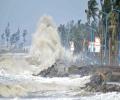
The India Meteorological Department (IMD) has announced that conditions are becoming favourable for the onset of the southwest monsoon over parts of the south Bay of Bengal, Andaman Sea, and Andaman and Nicobar Islands towards the end of this week.

The India Meteorological Department (IMD) has forecasted an early onset of the southwest monsoon over Kerala, expected around May 26. This marks the beginning of the crucial rainy season for India.

The El Nino impact on the Indian monsoon typically manifests by way of extended break in rainfall.

El Nino is often associated with below average warmer, dry weather across Asia Pacific region.

Climate scientists warn that climate change is intensifying heatwaves in India, with the cooling effects of La Nia potentially becoming less effective in a warmer future. The India Meteorological Department (IMD) predicts an early summer with above-normal temperatures and intense heatwave spells, following an unusually dry winter and the warmest February since 1901. Experts emphasize the role of human-caused climate change, along with natural climate drivers like El Nio and La Nia, in shaping weather patterns. While La Nia typically brings cooler temperatures, scientists suggest that under climate change, its ability to mitigate heatwaves may be diminished.

Skymet expects a good monsoon over western and southern India.
Several global models are predicting El Nio to appear around the second half of the year, which are the crucial rain-bearing months.

Heatwave may abate over most parts of North India in next two days; temperatures likely to drop by 2-3C.

The El Nino risks for this year is rising in India and it could result in sub-par rains, says a report.

Deficient rains can shave 50-80 basis points off gross domestic product and hurt consumption.

The southwest monsoon season concluded on Saturday with India receiving 'below-average' cumulative rainfall -- 820 mm compared to the long-period average of 868.6 mm -- in an El Nino year.

India will receive normal monsoon this season, country's meteorological department said on Wednesday in its forecast for the Southwest monsoon that covers 75 per cent of the country, and thereby may bring much-needed respite to the economy, which is reeling under the catastrophic effect of the Covid-19 pandemic.

The warmest six years have all been since 2015, with 2016, 2019 and 2020 being the top three. The differences in average global temperatures among the three warmest years are indistinguishably small. The average global temperature in 2020 was about 14.9C, 1.2 ( 0.1) C above the pre-industrial (1850-1900) level.

Addressing a press conference virtually, India Meteorological Department Director General Mrutyunjay Mohapatra said September was likely to witness normal rainfall in the range of 91-109 per cent of the long period average of 167.9 mm.

Data spanning the years 1951 to 2014 show that temperature and pressure conditions at specific locations in the Arctic region during the pre-monsoon period correlate with the Indian summer monsoon rainfall, points out Charu Bahri.

'All El Ninos are not associated with the deficient monsoon.'

Gold prices this year are higher than last year, and the goods and services tax is an additional burden for consumers
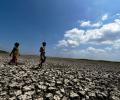
'The first two months of monsoon are not looking good.' 'In case both the halves fail, it is going to be misery.'

'It affects our economy, it is very important in many ways.' 'So we have to be the foremost experts in the world on the monsoon.' 'But the best minds in India have not devoted their time to the study of monsoon and they have followed the fashions of the West.'

Officials said good rain in August - though it might not improve acreages much for most crops except urad, moong, and paddy - would help in improving yields in the crops already planted.
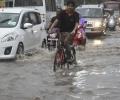
The southwest monsoon over the country is likely to be normal in July, the India Meteorological Department (IMD) said on Thursday in its forecast for the month.
 © 2026 Rediff.com - Advertise with us - Disclaimer - Privacy Policy - Sitemap - Feedback - About us - Terms of use - Grievances